
In our last piece, we explored how the definitions we hold play a key role in building our homes and shaping the environments we create.
Why the fuss around definitions?
What if I told you that every decision you make, from deciding what to eat for lunch to which school to enrol your kids in, is all a product of the perspectives you hold? We make decisions not only based on what we know, but also on what we are unaware of or don’t yet understand. Hence, it is worth regularly reviewing the definitions that inform our decisions.
A helpful way to think about our definitions and perspectives is to see them as the lenses through which we interpret and experience life.
Have you ever put on a pair of sunglasses with brown-tinted lenses and noticed how everything suddenly takes on a brown hue? In the same way, our perspectives colour everything. They influence how we see situations, interpret experiences, and respond in our daily interactions.
Many people are often unaware of the blind spots and limitations within their own ‘lens’ till they reflect on their life experiences and the consequences of their decisions. These blind spots don’t automatically disappear when we get married, have kids, or enter new seasons of life. Instead, they remain rooted in our subconscious and often become even more pronounced until we make a conscious effort to identify and reshape them.
Which brings us to an important question:
How are these definitions formed? How do they latch onto us?
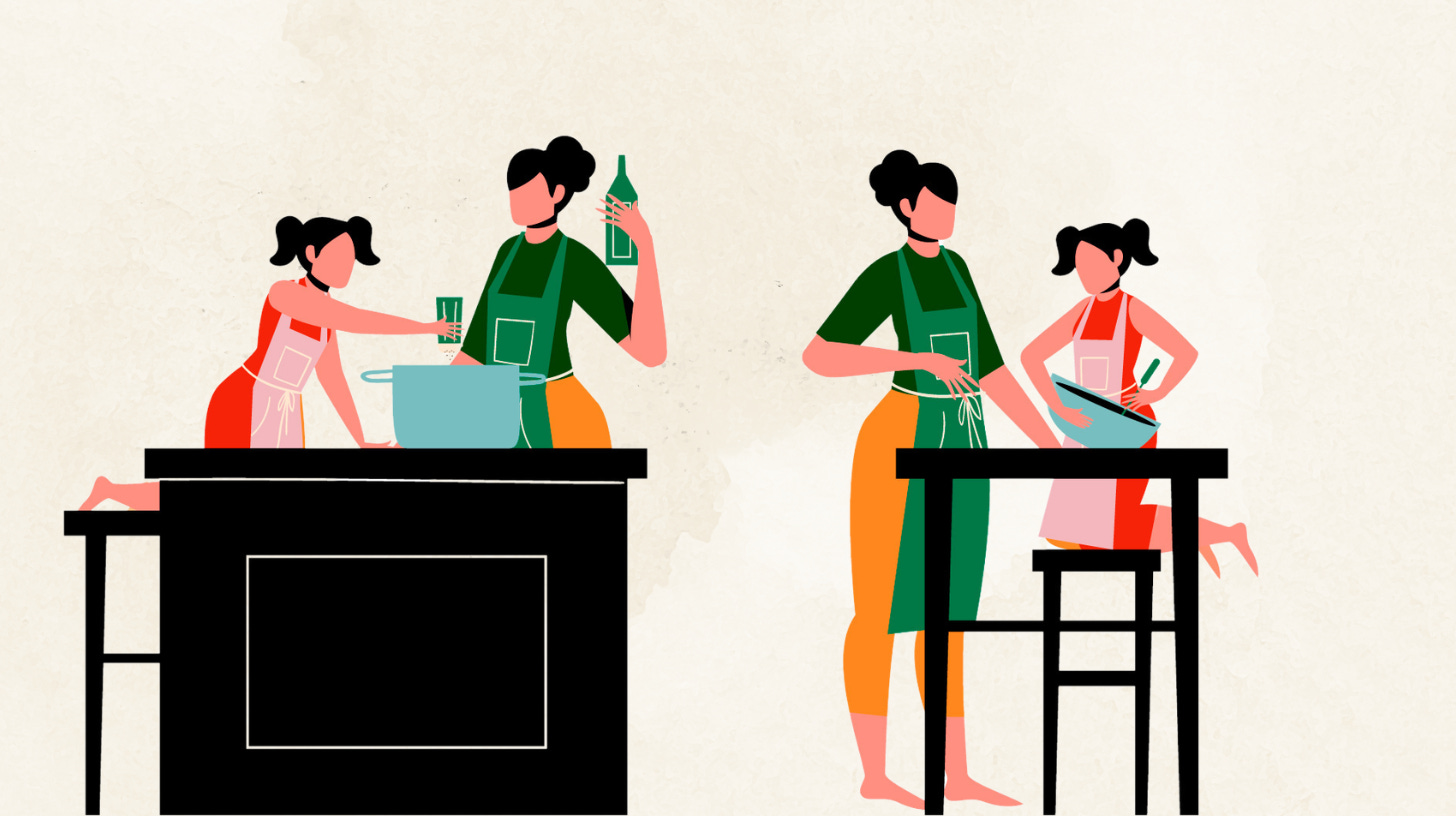
When I was younger, I recall having to learn to cook one of our local soup dishes with my mum. If there’s anything to know about Nigerian cuisine, it’s our love for rich flavour, aromatic spices and the joy of communal cooking!
However, a challenge with having multiple people add spices to the same dish is that, without realising it, the same ingredient can be added repeatedly (this actually happened in our home a few weeks ago. lol). What started with good intentions quickly takes an unexpected turn.
The problem isn’t that many people contribute to the cooking, but that there’s no process in place to ensure the right spices are added.
Similarly, our perspectives are shaped by a variety of influences: family background, past experiences, views of people around us, ethnic biases, and, not to mention, social media. These are the different influences in our space that can legitimately pour ‘their spice’ and define the flavour of our lives. But the challenge with this approach is that when we take a back seat and let other elements actively shape our beliefs, then we risk having a distorted perspective.
It may be easier to say, “ Oh well, I’d handle all the cooking and spicing myself, less risky’’. But this approach is neither realistic nor biblical. God doesn’t tell us to isolate ourselves or reject influences but to approach them with wisdom and discernment, as you will see with Moses, whose father-in-law, Jethro, advised him on how to handle the issues of leading his large family, Israel (Exodus 18:17-24).
Influence is inevitable, but intentionally filtering information is our responsibility.
So how do we approach this?
Reflecting on my cooking experience, the emerging question is, are you in charge of the spices? Let’s break it down:
How often do you create mental filters to sieve the definitions that come from friends, family, media, or your experiences?
Do you actively take a stand on which perspectives can stay in or out of your mind?
How often do you hear or observe a situation, scrutinise it, and tell yourself, “this isn’t true, I won’t be accepting this as a part of my belief system”, or “this aligns with God’s perspective and my values of family building, so I’d hold on to this?
See you in the next post!